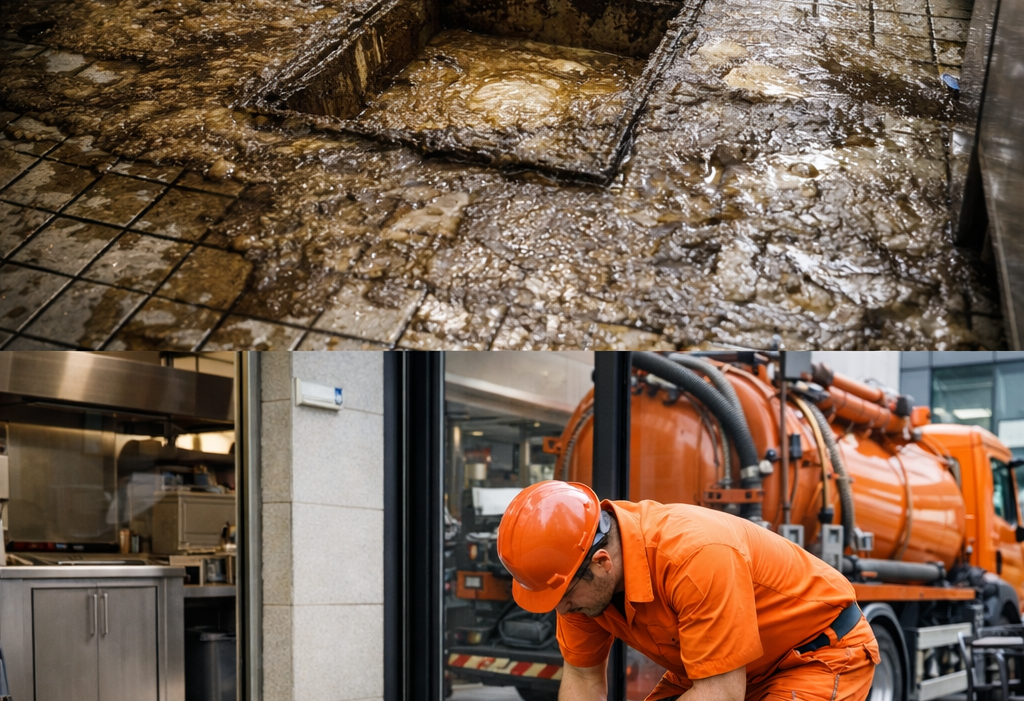
When a grease trap overflows, the damage is immediate. Kitchens are forced to shut down, customers are turned away, and emergency crews are called in under pressure. What many business owners don’t realize is that emergency grease trap service is usually the most expensive way to manage waste.
Emergency situations often involve blocked sewer lines, contaminated floors, and potential health code violations. In these moments, costs go beyond the service itself — lost revenue, staff downtime, reputational damage, and possible fines add up quickly.
Preventive grease trap maintenance, on the other hand, is designed to eliminate these scenarios. By following a scheduled pumping and cleaning routine based on kitchen volume and usage, grease never reaches critical levels. This keeps systems flowing properly and inspections stress-free.
Professional service providers also document each cleaning, ensuring compliance with local regulations. Over time, preventive maintenance is not just cheaper — it becomes a strategic operational decision that protects both the business and the surrounding infrastructure.
The choice is simple: react under pressure or plan with control. The businesses that grow sustainably always choose prevention.