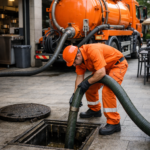

Grease trap compliance isn’t optional in Miami-Dade County—it’s a strict requirement that can make or break your restaurant business. With the Department of Environmental Resources Management (DERM) enforcing stringent Fats, Oils, and Grease (FOG) regulations, restaurant owners face mounting pressure to stay compliant or risk hefty fines, operational shutdowns, and costly legal consequences.
Recent developments in 2026 have intensified scrutiny on Miami-Dade grease trap compliance. In February 2026, the Miami-Dade County Board of Commissioners passed a resolution directing a comprehensive study of FOG regulations to determine whether they can be implemented in a less financially burdensome manner for local businesses. This move acknowledges the significant economic strain these regulations place on restaurants, particularly small establishments struggling with installation costs that can exceed $40,000 for gravity interceptor systems.
“Miami-Dade County Board of Commissioners directed study on FOG regulations financial burden”
— Miami-Dade County Legislative Matter 260223
Whether you’re opening a new restaurant, taking over an existing establishment, or simply ensuring your current operation stays compliant, understanding Miami-Dade’s FOG ordinance is essential. This comprehensive guide breaks down everything you need to know about grease trap regulations, compliance requirements, costs, and best practices for 2026.
Table of Contents
- Understanding the Miami-Dade FOG Program
- Who Needs a Grease Interceptor
- Grease Trap vs. Grease Interceptor: Key Differences
- Step-by-Step Compliance Requirements
- Miami-Dade DERM’s Role in FOG Enforcement
- Common Violations and Penalties
- Best Practices for Ongoing Compliance
- Cost Breakdown for Grease Trap Compliance
- Questions Fréquentes (FAQ)
- Chiffres Clés
Understanding the Miami-Dade FOG Program
The Miami-Dade FOG (Fats, Oils, and Grease) Control Program exists to protect the county’s wastewater infrastructure and environment from the damaging effects of grease discharge. When FOG enters sewer systems, it cools, solidifies, and accumulates on pipe walls, causing blockages, sewage backups, and environmental contamination.
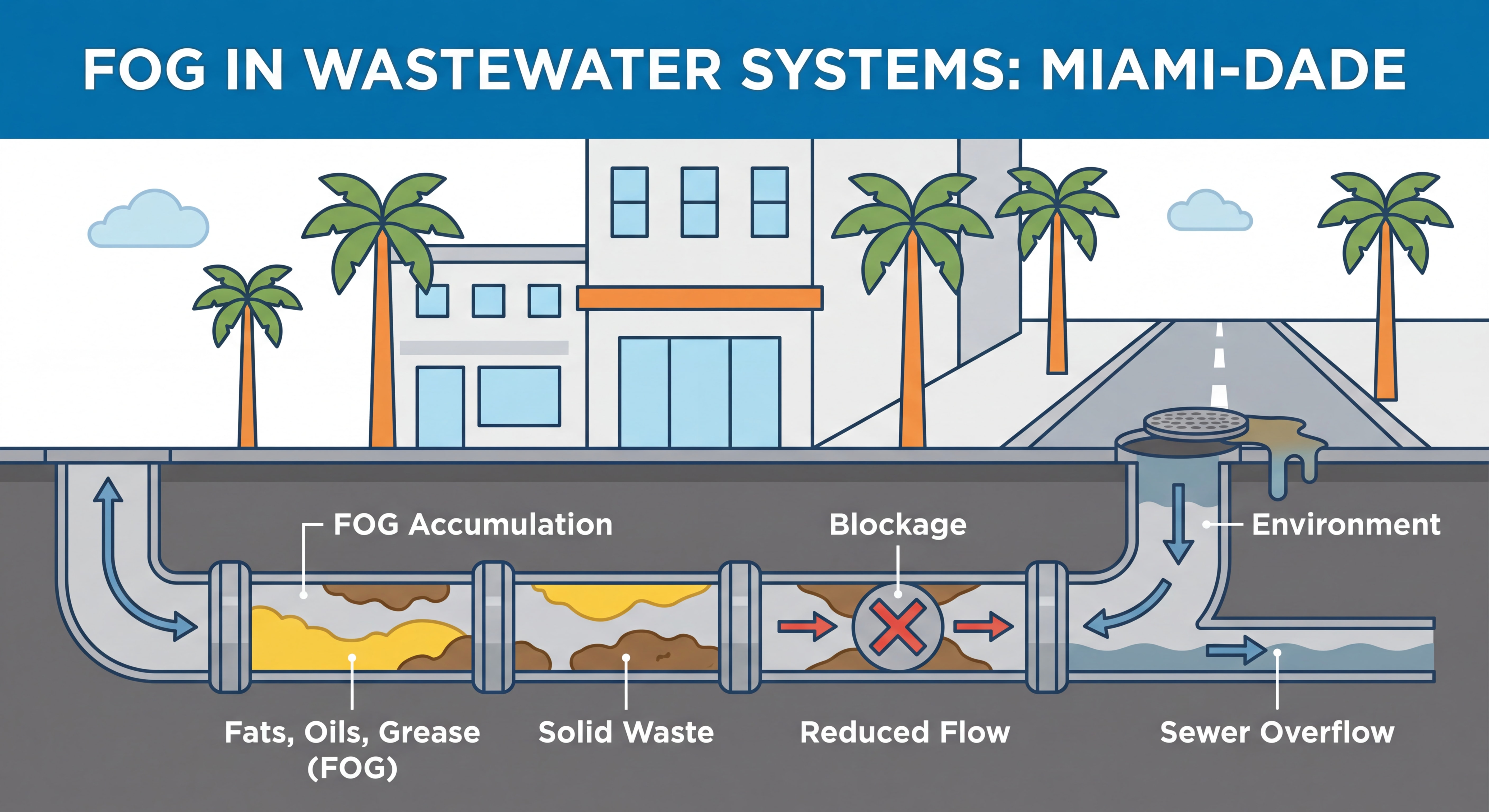
The program became mandatory on March 5, 2018, following a federal court order requiring Miami-Dade County to correct past and current issues related to grease discharge. This consent decree between Miami-Dade County, the United States of America, and the State of Florida established strict requirements for all food service establishments.
“Miami-Dade FOG program implemented under federal consent decree”
— Miami-Dade County Code Section 24-42.6
Why the FOG Program Matters
Even low concentrations of FOG—as little as 150 mg/L—can significantly impact sewage collection, transmission, and treatment facilities. The consequences extend beyond individual restaurants to affect entire communities through:
- Sewer system blockages and overflows
- Environmental contamination of waterways
- Increased municipal wastewater treatment costs
- Public health hazards from sewage backups
- Infrastructure damage requiring expensive repairs
The program aims to achieve near-zero grease waste discharge, placing responsibility squarely on food service establishments to manage FOG at the source.
Who Needs a Grease Interceptor
Miami-Dade County requires grease interceptors for any non-residential facility that introduces food waste or substances like vegetable or animal products used in cooking, food preparation, or cleaning processes into the sanitary sewer system.
Required Establishments
The following businesses must comply with grease trap regulations:
- Restaurants (all types: fast food, full-service, fine dining)
- Cafeterias (schools, hospitals, corporate)
- Bakeries (especially those with fryers)
- Hotel and resort kitchens
- Commercial kitchens (catering, commissaries)
- Healthcare facility kitchens (nursing homes, assisted living, hospitals)
- Daycare centers with food preparation
- Coffee shops and juice bars
- Food trucks and mobile vendors
- Food processing plants
If your establishment sends wastewater containing FOG into the sewer system, you need both an approved, installed grease trap and a FOG Grease Discharge Operating (GDO) permit.
Installation Timeline
Business owners must have grease interceptors installed before opening. For existing businesses, compliance was required by March 5, 2018. Any change in ownership, modifications to the back-of-house operations, or permit expiration can trigger requirements to upgrade to newer, more demanding standards.
Grease Trap vs. Grease Interceptor: Key Differences
Understanding the distinction between grease traps and grease interceptors is crucial for proper compliance and budgeting.
Technical Definitions
Grease Traps are smaller, typically under-sink devices designed to capture FOG from individual fixtures. They’re usually installed indoors and have limited capacity (10-50 gallons).
Grease Interceptors are larger systems installed outside or underground, designed to handle wastewater from entire commercial kitchens. They can range from 500 to several thousand gallons in capacity.
Sizing and System Types
Miami-Dade County outlines specific sizing rules based on the FOG 2.5 Control Device Guidance Manual. The county now requires 99% efficiency-compliant systems that include:
- Solids interceptor
- Grease interceptor
- Sampling port
| Feature | Gravity Interceptors | Hydromechanical Interceptors |
|---|---|---|
| Design | Large tank, septic-style | Compact mechanical unit |
| Flow Control | Uncontrolled | Controlled flow rates |
| Sizing Method | Liquid capacity + 30-min retention time | Flow rate calculations (GPM) |
| Footprint | Large installation area | Smaller space requirement |
| Installation Cost | $15,000 – $40,000+ | $4,000 – $15,000 |
| Efficiency | 99% (when properly sized) | 99% (with proper maintenance) |
| Best For | High-volume restaurants | Medium to smaller operations |
📊 Up to $40,000 for gravity systems vs. lower costs for hydromechanical – Installation Cost Difference
Sizing Calculations
Proper sizing prevents compliance issues and excessive maintenance costs. Undersized interceptors fill quickly and allow grease to bypass into sewer lines, while oversized units may not function efficiently.
Gravity interceptors use:
- Drainage fixture units
- Flow rates
- 30-minute retention times
- Total liquid capacity
Hydromechanical interceptors calculate based on:
- Gallons per minute (GPM) flow rate
- Number of meals served during peak hours
- Waste flow rate (typically 6 gallons with dishwashing machines, 5 without)
- Storage factor based on hours of operation
Step-by-Step Compliance Requirements
Achieving and maintaining Miami-Dade grease trap compliance involves multiple steps, from initial installation through ongoing maintenance and documentation.
1. Installation Standards and Permits
Before Installation:
- Obtain Municipal Occupational License and Certificate of Use from your local municipality
- Submit a Grease Interceptor Permit Application to Miami-Dade Water and Sewer Department
- Wait for approval before beginning installation
- Ensure interceptor size matches your kitchen’s grease production
Installation Requirements:
- Only grease waste lines can connect to FOG control devices
- Sampling point must be provided on the discharge side
- Installation must meet Florida Building Code specifications
- Location must allow easy access for maintenance and cleaning
- Professional installation by licensed contractors
“Grease trap installation requires sampling point on discharge side”
— Miami-Dade County Environmental Code Chapter 24, Section 24-18
2. Required Maintenance Schedules
Miami-Dade enforces strict maintenance requirements known as the 25% Rule:
The 25% Rule: The total depth of floating grease plus settled solids cannot exceed 25% of the total liquid depth in the interceptor.
Maintenance Frequency:
- 90-day maximum: Clean interceptors at least every 90 days
- 25% capacity: Pump when grease and solids reach 25% of total capacity
- Whichever comes first determines your cleaning schedule
High-volume restaurants, fast-food establishments, and those specializing in fried foods often require monthly or even bi-monthly cleaning to stay under the 25% threshold.
Small under-sink grease traps: Every 30 days
Large grease interceptors: Every 90 days or at 25% capacity
3. Mandatory Record-Keeping and Documentation
Miami-Dade County requires meticulous documentation of all grease trap maintenance. Missing or incomplete records can result in immediate $250 fines.
Required Records:
- Date and time of each cleaning
- Name and contact information of licensed service provider
- Hauler permit number and expiration date
- Volume of waste removed
- Disposal method and location
- Service manifests (must be retained onsite for 1 year)
Best Practices:
- Keep both paper and digital copies
- Organize records chronologically
- Upload pump-out data immediately after service
- Verify hauler permits before signing contracts
- Double-check every manifest before filing
Miami-Dade’s FOG portal automatically cross-checks permits and pump-out logs every night at 2 a.m. Missing uploads trigger automatic $250 administrative fees.
📊 Miami-Dade FOG portal cross-checks records nightly at 2 a.m. – Automated Compliance Monitoring
4. Inspection Procedures and Frequency
DERM inspectors conduct routine inspections to verify compliance. During inspections, they:
- Use core sampling tools to measure the 25% threshold
- Review maintenance records and service manifests
- Verify hauler permits and documentation
- Check sampling ports and system functionality
- Assess proper disposal practices
Inspectors may arrive unannounced. If records are missing or access is delayed, they issue a $250 charge and return within 72 hours.
Miami-Dade DERM’s Role in FOG Enforcement
The Miami-Dade County Department of Environmental Resources Management (DERM) administers the FOG program through comprehensive oversight, enforcement, and permitting.
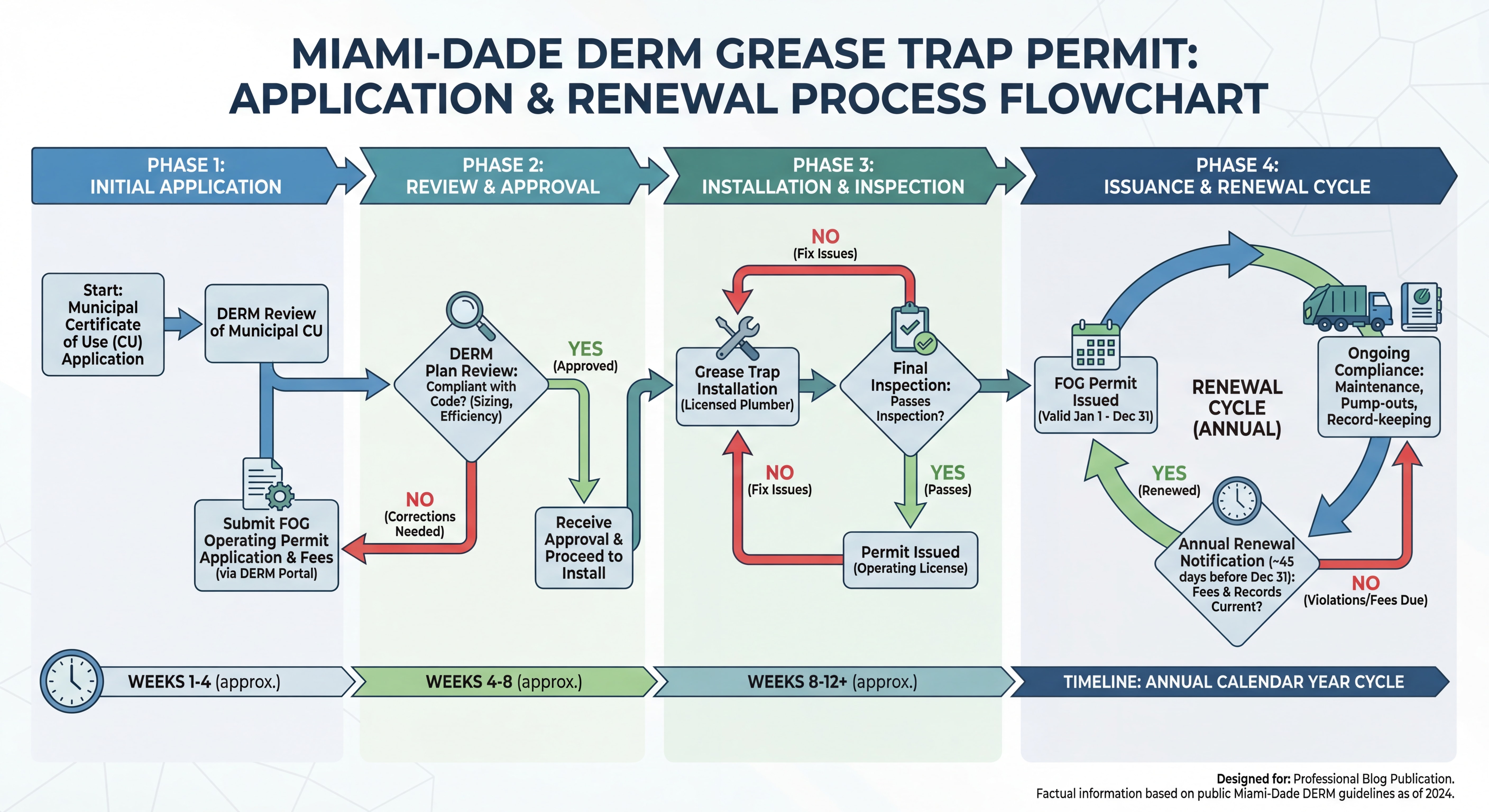
Permit Application Process
Initial GDO Permit Application:
- Obtain local Municipal Occupational License and Certificate of Use
- Complete the Grease Discharge Operating Permit Application
- Ensure business name matches exactly with Florida Secretary of State registration (including “d/b/a” if applicable)
- Verify square footage and seat counts match approved plans
- List grease trap specifications that match DERM-reviewed plans
- Submit application to DERM
- Pay initial permit fee ($200)
Critical Details:
- Any discrepancy between application and approved plans causes delays
- Indoor and outdoor seating must be accurately reported
- Square footage calculations must be precise
Annual Renewal Requirements
All FOG permits expire December 31 each year. Restaurant owners must:
- Renew permits by 11:59 p.m. on December 31
- Pay annual renewal fee ($65)
- Submit annual certification prepared by a qualified professional engineer
- Attest that existing FOG control devices function as designed and are in good working order
Failure to renew by the deadline results in automatic $250 late fees added at midnight.
Change of Ownership Requirements
When a business changes ownership or undergoes modifications requiring a new certificate of use:
- New owner must apply for a new GDO permit
- Sellers/lessors must provide mandatory FOG generator disclosure statement
- Property inspections of FOG control devices are recommended
- Certain circumstances (construction, back-of-house changes) may require upgrading to newer, more demanding standards
Reporting Requirements
DERM requires:
- Annual professional certification of FOG control devices
- Service manifests from every pump-out (retained 1 year)
- Immediate reporting of any FOG control device breaches
- Compliance with revised permit conditions upon permit expiration
Common Violations and Penalties
Understanding the most frequent violations helps restaurant owners avoid costly penalties and operational disruptions.
Most Frequent Compliance Failures
1. Grease Trap Neglect
Missing or improper maintenance is the #1 FOG violation. Regular cleaning and solid documentation are essential.
2. Improper Disposal of Cooking Oil
Never pour grease down drains or dispose of it in regular trash. Use only licensed waste haulers.
3. Missing or Expired Permits
Operating without a valid GDO permit or failing to renew by December 31.
4. Inadequate FOG Interceptor Sizing
Interceptors that don’t match actual grease production cause ongoing compliance issues.
5. Incomplete or Missing Records
Failure to maintain service manifests or provide documentation during inspections.
Fine Structures and Penalty Ranges
| Violation Type | First Offense | Repeat Offense | Additional Consequences |
|---|---|---|---|
| Grease trap neglect | $500 – $2,500 | $5,000+ | Mandatory corrective actions |
| Oil disposal violations | $750 – $3,000 | $5,000+ | Community service |
| Missing permits | $300 – $1,200 | $2,500+ | Business closure |
| Missing records | $250 | $1,150 | 72-hour re-inspection |
| Failure to clean interceptor | Up to $250 | Escalating fines | License suspension |
| Unlawful grease disposal | $2,500 minimum | $5,000+ | 30-day license suspension |
| Second unlawful disposal | $5,000 minimum | Higher fines | 12-month license revocation |
“Florida grease trap violation penalties”
— Florida Statutes Section 403.0741
How Violations Impact Business Operations
Beyond monetary fines, violations can result in:
- Temporary business closure until compliance is achieved
- Permanent license revocation for severe or repeated violations
- Legal liability for damage to municipal sewer systems
- Increased insurance premiums
- Reputation damage from public health violations
- Loss of sales during required closures for repairs
Recent news reports highlight the serious consequences. In April 2025, WSVN reported that new code enforcement could shut down small businesses failing to meet grease trap requirements, while a February 2026 Hoodline article documented how Miami FOG rules are putting restaurants “on the hook for big bills.”
“Miami FOG rules create significant financial burden for restaurants”
— Hoodline
Best Practices for Ongoing Compliance
Maintaining continuous compliance requires proactive management, employee training, and strategic partnerships.
Choosing a Licensed Grease Trap Service Provider
Verification Checklist:
- Valid hauler permit number
- Current permit expiration date
- Proper vehicle markings
- Driver authorization
- Insurance requirements met
- References from other Miami-Dade restaurants
Service Agreement Should Include:
- Scheduled cleaning frequency
- Emergency service availability
- Manifest documentation and filing
- Digital record-keeping
- Compliance monitoring alerts
- 24/7 support contact
Employee Training on FOG Management
Educate your kitchen staff on:
Daily Practices:
- Never pour grease down drains
- Scrape plates thoroughly before washing
- Use sink strainers to catch food particles
- Dispose of cooking oil in designated containers
- Clean floor drains regularly
- Report any unusual odors or slow drains immediately
Weekly Checks:
- Inspect grease trap for proper function
- Check for leaks or damage
- Verify trap isn’t approaching 25% capacity
- Maintain cleaning logs
Kitchen Practices to Reduce Grease Discharge
Preventive Measures:
- Install dry wiping stations for staff to pre-clean dishes
- Use grease collection containers near cooking stations
- Implement oil filtration systems to extend cooking oil life
- Train staff on proper dishwashing procedures
- Avoid using garbage disposals for greasy waste
- Post FOG management reminders in kitchen areas
Menu Considerations:
- Document grease production by menu item
- Adjust cleaning frequency during high-volume periods
- Consider seasonal variations in grease generation
Digital Compliance Tracking Tools
Modern technology simplifies compliance management:
FOGBMP Software (approved by Miami-Dade County DERM):
- Automated cleaning logs and records
- Compliance tracking and alerts
- Digital manifest storage
- Renewal reminders 45 days before expiration
- Mobile access for inspectors
- Integration with hauler services
Benefits:
- Reduces risk of missing deadlines
- Provides instant access during inspections
- Tracks compliance history
- Simplifies record-keeping
- Prevents costly fines
Cost Breakdown for Grease Trap Compliance
Understanding the full financial commitment helps restaurant owners budget appropriately and avoid surprises.
Installation Costs
| System Type | Size Range | Average Installation Cost | Best For |
|---|---|---|---|
| Under-sink grease trap | 10-50 gallons | $250 – $1,500 | Coffee shops, small cafes |
| Floor unit | 50-200 gallons | $2,000 – $5,000 | Medium restaurants |
| Hydromechanical interceptor | 200-1,000 gallons | $4,000 – $15,000 | Most restaurants |
| Gravity interceptor | 1,000+ gallons | $15,000 – $40,000+ | High-volume establishments |
| Automatic grease removal unit (AGRU) | Varies | $5,000 – $18,000+ | Automated compliance needs |
Additional Installation Expenses:
- Excavation and site work: $1,000 – $5,000
- Plumbing modifications: $500 – $3,000
- Permits and inspections: $200 – $800
- Professional engineering plans: $500 – $2,000
- IoT monitoring systems: $500 – $2,000
📊 $4,800 for basic systems to $18,000+ for advanced installations – Average 2026 Grease Trap Installation Cost
Maintenance and Pumping Costs
Regular Service:
- Monthly cleaning (high-volume): $150 – $300 per service
- Quarterly cleaning (90-day): $200 – $500 per service
- Emergency pump-outs: $300 – $700
- Annual professional certification: $300 – $800
Annual Maintenance Budget:
- Small establishments: $600 – $1,200
- Medium restaurants: $1,200 – $2,400
- High-volume operations: $2,400 – $4,800
Permit and Inspection Fees
- Initial GDO permit: $200
- Annual renewal: $65
- Late renewal penalty: $250
- Re-inspection fee: $250
- Professional engineer certification: $300 – $800 annually
Budget Planning Tips
For New Restaurants:
- Factor $5,000 – $20,000 for grease trap installation into startup costs
- Budget $1,500 – $3,000 annually for maintenance and permits
- Set aside emergency fund for unexpected repairs ($2,000 – $5,000)
- Consider financing options for larger installations
For Existing Restaurants:
- Schedule maintenance during slow periods to minimize disruption
- Negotiate annual service contracts for predictable costs
- Invest in preventive measures to reduce cleaning frequency
- Monitor grease production to optimize interceptor size
Cost-Saving Strategies:
- Bundle services with licensed haulers for volume discounts
- Implement rigorous employee training to reduce grease discharge
- Use digital tracking to avoid late fees and penalties
- Maintain equipment properly to extend lifespan
- Consider automatic systems to reduce long-term maintenance costs by 40%
Questions Fréquentes (FAQ)
How often must grease traps be cleaned in Miami-Dade County?
Grease traps must be cleaned every 90 days maximum OR when they reach 25% capacity—whichever comes first. High-volume restaurants and those serving fried foods typically require monthly or bi-monthly cleaning. Small under-sink traps need cleaning every 30 days. Inspectors use core sampling tools to verify the 25% threshold, and violations result in fines up to $250 per failure.
What happens during a Miami-Dade DERM grease trap inspection?
DERM inspectors arrive unannounced to conduct compliance checks. They use core sampling tools to measure grease and solids levels, review maintenance records and service manifests, verify hauler permits, check sampling ports and system functionality, and assess disposal practices. If records are missing or access is delayed, inspectors issue a $250 charge and schedule a re-inspection within 72 hours. Be prepared with organized documentation and immediate access to your grease trap.
Can I handle grease trap maintenance in-house?
No. Miami-Dade County requires licensed waste haulers to perform grease trap pumping and disposal. Restaurant owners cannot legally pump their own traps or dispose of grease waste. You must contract with a permitted hauler who provides proper service manifests and disposes of waste at approved facilities. Additionally, annual certifications must be prepared by qualified professional engineers—not restaurant staff. Attempting in-house maintenance violates county regulations and results in significant fines.
What if I’m opening a new restaurant in Miami-Dade?
New restaurants must have grease interceptors installed and approved BEFORE opening. First, obtain your Municipal Occupational License and Certificate of Use from your local municipality. Then submit a Grease Interceptor Permit Application to Miami-Dade Water and Sewer Department with proper sizing calculations based on your menu, seating capacity, and hours of operation. Wait for approval before installation. Budget $5,000 – $20,000 for installation plus $200 for the initial GDO permit. Factor ongoing maintenance costs ($1,500 – $3,000 annually) into your business plan.
What are the penalties for operating without a grease trap permit?
Operating without a valid GDO permit results in fines ranging from $300 – $1,200 for first offenses, escalating to $2,500+ for repeat violations. More seriously, Miami-Dade County can issue immediate business closure orders until compliance is achieved. The county’s automated FOG portal monitors all food service establishments, making it virtually impossible to operate undetected. Beyond fines, you face legal liability for any damage to municipal sewer systems, potential license revocation, and reputation damage from public health violations.
Chiffres Clés
📊 $40,000 – Maximum installation cost for gravity grease interceptor systems in Miami-Dade (Source: Grease Pros Recycling 2025)
💰 $250 – Automatic administrative fee issued by Miami-Dade’s FOG portal for missing pump-out records (Source: Grease Connections 2025)
⚖️ $5,000+ – Minimum fine for second offense unlawful grease disposal, plus 12-month license revocation (Source: Florida Statutes 403.0741)
🔄 25% – Maximum capacity threshold for grease and solids before mandatory cleaning required (Source: Miami-Dade County Code 24-42.6)
📅 90 days – Maximum time between grease interceptor cleanings, regardless of capacity level (Source: Miami-Dade DERM Regulations)
🏢 99% – Required efficiency rating for compliant grease interceptor systems in Miami-Dade County (Source: FOG 2.5 Control Device Guidance Manual)
Conclusion
Miami-Dade grease trap compliance represents a significant operational and financial commitment for restaurant owners, but it’s non-negotiable for legal operation in 2026. The county’s FOG program, enforced by DERM with automated monitoring and strict penalties, leaves no room for shortcuts or delays.
While the February 2026 County Commission resolution signals potential future relief for businesses struggling with compliance costs, current regulations remain fully enforceable. Restaurant owners must prioritize proper installation, regular maintenance, meticulous record-keeping, and partnerships with licensed service providers to avoid devastating fines and business closures.
Success in grease trap compliance comes down to three principles: understand the requirements thoroughly, implement systems proactively, and document everything meticulously. The restaurants that thrive in Miami-Dade’s regulatory environment treat FOG compliance not as a burden, but as a fundamental aspect of professional kitchen management.
Whether you’re planning a new restaurant, taking over an existing establishment, or ensuring your current operation stays compliant, invest the time and resources necessary to get grease trap management right from day one. The alternative—fines, closures, and legal complications—will cost far more than proper compliance ever could.
Ready to ensure your restaurant’s grease trap compliance? Contact a licensed Miami-Dade grease trap service provider today to schedule an assessment, verify your current system meets 2026 standards, and establish a maintenance schedule that keeps your business running smoothly and legally.